Flutter Healthcare App Development: Ensuring HIPAA & Australian Data Compliance
- What Is HIPAA, and Why Does It Matter Globally?
- Key HIPAA Rules Relevant to Healthcare Apps
- Privacy Rule
- Security Rule
- Breach Notification Rule
- Australian Healthcare Data Regulations Developers Must Know
- Privacy Act 1988
- Australian Privacy Principles (APPs)
- My Health Records Act
- Architecture Decisions That Determine Compliance
- Secure Backend Infrastructure
- Encryption of Data
- Role-Based Access Control
- Best Practices for Building Compliant Flutter Healthcare Apps
- Secure Authentication Systems
- Encrypted Data Storage
- Secure API Communication
- Regular Security Testing
- Common Compliance Mistakes in Flutter Healthcare Projects
- Storing Sensitive Data Locally
- Weak Authentication Systems
- Lack of Audit Trails
- Conclusion
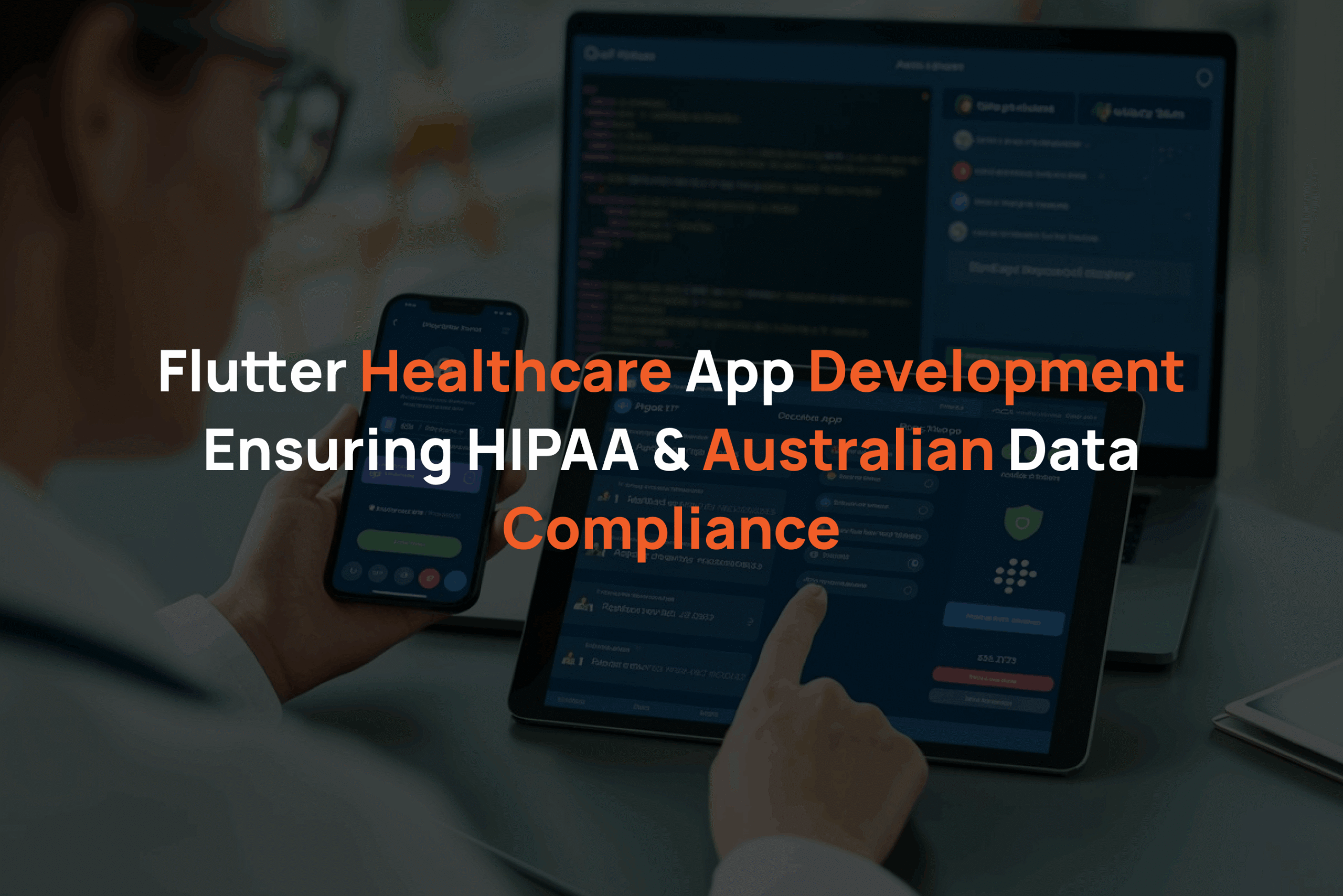
Digital platforms are quickly taking over healthcare. Mobile apps allow for services like telemedicine, patient monitoring, e-prescriptions, and managing appointments. Strong data privacy and security standards must be kept in these applications because they deal with very private patient information. Medical records, personal information, and treatment histories can be made public through any weakness.
Healthcare software has to follow strict rules like HIPAA (Health Insurance Portability and Accountability Act) and Australia’s Privacy Act 1988, along with the Australian Privacy Principles (APPs), to keep these kinds of risks from happening. As the need for digital health platforms grows, Flutter app development in Australia is focusing more and more on making safe, compliant apps that keep patient data safe while providing reliable healthcare services.
What Is HIPAA, and Why Does It Matter Globally?
HIPAA is a set of U.S. rules that are meant to keep Protected Health Information (PHI) safe. Even though it’s an American law, it has an impact on healthcare apps all over the world, especially those that connect to the U.S. It could be healthcare providers, patients, or computer systems. Following HIPAA rules makes sure that information about patients is safely gathered, stored, and sent.
Key HIPAA Rules Relevant to Healthcare Apps
Privacy Rule
The Privacy Rule says what can and cannot be done with health information about patients. Healthcare apps must make sure that PHI is only seen by authorized users and is only used for healthcare-related tasks.
Security Rule
Electronic health records must be kept safe by the technical measures required by this rule. To keep data from getting into the wrong hands, mobile apps need to use encryption, strong authentication systems, and controlled access.
Breach Notification Rule
If a healthcare app has a data breach involving PHI, the company must tell the people who were affected and the authorities within a certain amount of time.
Because of these needs, security architecture is an important part of making sure that healthcare applications are built in a way that meets regulations.
Australian Healthcare Data Regulations Developers Must Know
Healthcare apps that work in Australia have to follow national privacy rules that are meant to keep personal and medical data safe.
Privacy Act 1988
The Privacy Act 1988 sets rules for how businesses in Australia can collect, use, and handle personal information. The way that patient information is collected and used in healthcare apps must be clear to users. To keep data safe, developers must make sure there are clear privacy policies, secure storage, and the right safeguards to stop unauthorized access.
Australian Privacy Principles (APPs)

The Australian Privacy Principles (APPs) tell people how to handle personal information in the best way possible. Healthcare apps should only collect the patient data they need, be clear about how they will use that data, and have strong security measures in place to protect the data they store. Patients should also be able to see or change their own personal information whenever they need to.
My Health Records Act

The My Health Records Act sets the rules for Australia’s national system for digital health records. When apps connect to My Health Record, they have to follow strict rules about user permissions, secure access, and sharing data. Developers need to make sure that only people who are allowed to can see patient records and that all interactions with data are safe.
Architecture Decisions That Determine Compliance
The right technical architecture is the first step to making sure that healthcare apps are compliant. Safety must be built in from the beginning, not after the fact.
Secure Backend Infrastructure
A secure backend is necessary to keep patient information safe from people who shouldn’t have access to it. Healthcare applications should rely on properly configured cloud environments that support encrypted databases, secure server setups, and strict access management. These measures help ensure that sensitive medical data remains protected within the system.
Encryption of Data
Encryption is a very important part of keeping healthcare information safe. Secure protocols like HTTPS and TLS must be used to protect data sent between the app and servers. Strong encryption standards must be used to protect data stored on the servers. This makes sure that even if data is stolen, it can’t be accessed without the right permissions.
Role-Based Access Control
Platforms for healthcare have many users, such as patients, doctors, nurses, administrators, and others. Role-based access control makes sure that each user can only see information that is relevant to their job. This method lowers the chance that sensitive health records will be seen by people who shouldn’t be able to and helps keep control of them.
Best Practices for Building Compliant Flutter Healthcare Apps
To make a safe healthcare app, you need to use the same security methods throughout the whole development process.
Secure Authentication Systems
Strong authentication systems keep people who aren’t supposed to be there from getting to private medical records. Multiple-factor authentication, biometric login, and secure session management are some of the extra security measures that healthcare apps use.
Encrypted Data Storage
Information about a patient should never be kept in an app as plain text. By encrypting both locally stored and cloud-stored data, sensitive health records will be safe even if there is a system breach.
Secure API Communication
Hospital databases, telehealth platforms, and other outside services are often linked to healthcare apps. Using authenticated APIs and secure communication protocols helps keep data from being stolen and access denied by people who aren’t supposed to be there.
Regular Security Testing
Regular security checks help find holes in security before they become big problems. Penetration testing, vulnerability scanning, and compliance audits are all methods that help keep security and regulatory standards high.
Common Compliance Mistakes in Flutter Healthcare Projects
Here are some of the most common problems:
Storing Sensitive Data Locally
Many apps keep patient data on local devices without encrypting it. This increases the risk of data loss or theft in the event of device theft or loss.
Weak Authentication Systems
Using only basic authentication, such as a password, can leave healthcare apps open to being hacked.
Lack of Audit Trails
Healthcare systems need to keep track of who saw patient information and when. Without proper tracking, it’s hard to find or look into cases of data misuse.
Conclusion
Healthcare apps are changing how people get care and keep track of their medical records, but they need strict rules to keep that information safe. Laws like HIPAA and Australia’s privacy laws make sure that private health information is kept safe and secure.
Organizations can make healthcare platforms that work well by using safe architectures, strong encryption, and development methods that focus on compliance. Skilled Flutter app developers are crucial for making sure that applications are safe, scalable, and meet the trust needs of both regulators and patients.
Let’s talk

Schedule a time for personalized analysis and solutions to scale your business effectively.



With more than 12 years in the game, we excel in delivering top-notch IT solutions tailored for medium-sized enterprises and large corporations. We're committed to your success, taking great pride in both our craftsmanship and the relationships we build with our clients.

Boost your Business Today by Teaming up with the Best!
1.5k brochure Downloaded