AI-Powered Travel Planning Applications: Transforming How Australians Explore
- Why AI Travel Apps Are Gaining Ground in Australia
- How AI is Changing the Way People Plan Trips
- Making Customised Itineraries
- Smart Price Prediction and Booking
- Conversational Trip Planning Assistants
- Real-Time Travel Adjustments
- Language and Cultural Assistance
- Sustainable and Budget-Conscious Travel Options
- What Makes a Great AI Travel App
- Why Local Development Expertise Matters
- Challenges to Keep in Mind
- Conclusion
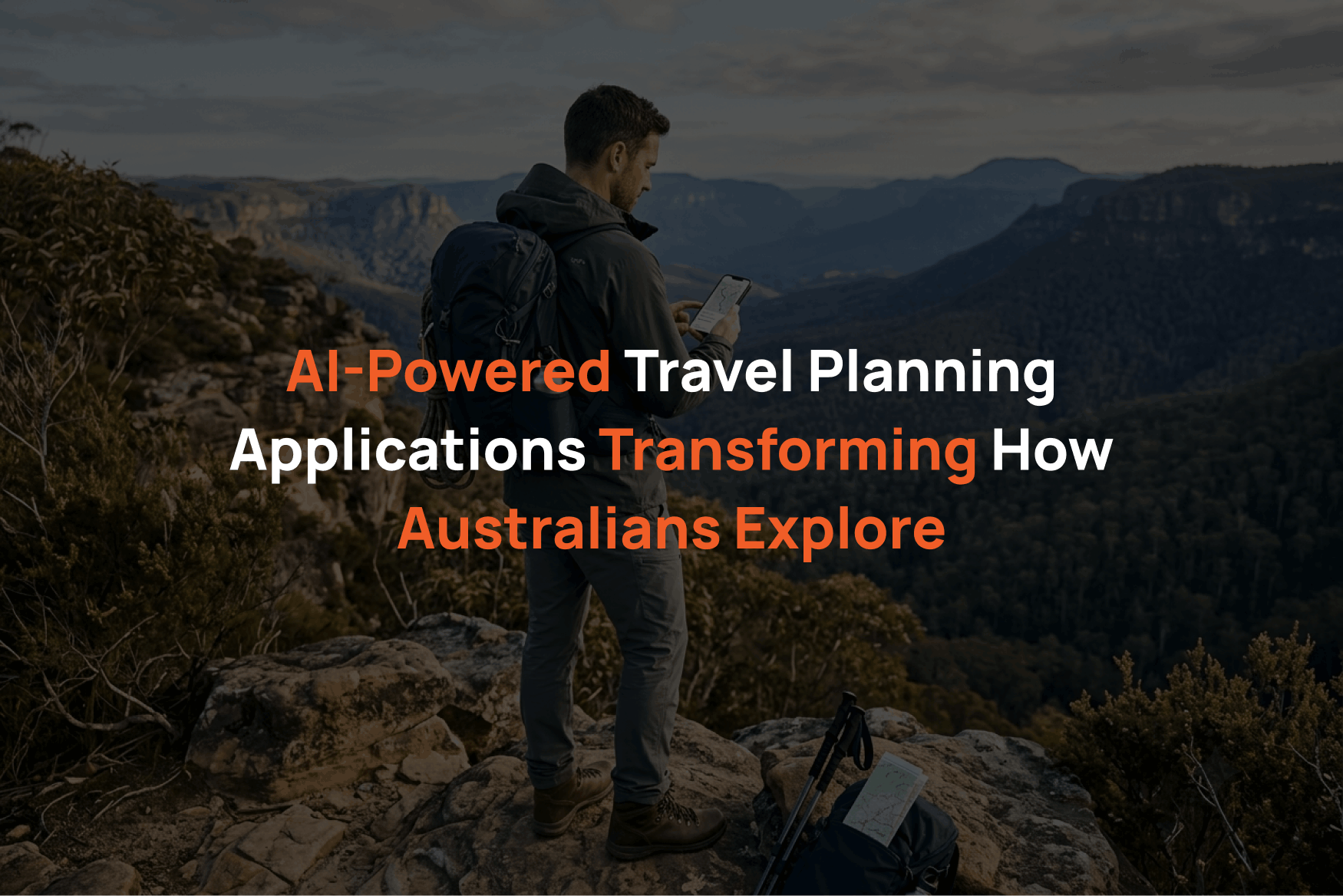
Australians are some of the most enthusiastic travellers in the world. They love taking long trips like “bucket list” trips through Europe or Asia, or weekend trips to the Hunter Valley. But in the past, planning a trip meant spending hours looking at different websites to compare flights, read reviews, and put together itineraries. Artificial intelligence is changing that. Travel planning apps that use AI are now doing most of the work, like making personalised itineraries, predicting price drops, and giving real-time suggestions based on how people like to travel.
Why AI Travel Apps Are Gaining Ground in Australia
Because Australia is pretty far away from other countries, most international trips require long flights with many stops and a lot of planning. But Australians also take their domestic travel very seriously. They visit places like the Great Barrier Reef and the wilderness of Tasmania. Because people travel a lot and the trips are often complicated, there is a big need for smarter planning tools that make booking and making plans easier.
App developers in the area have heard you. Australian app development companies like Appgurus have been working on making smart travel and booking platforms that use AI to personalise, real-time data, and seamless booking experiences that are tailored to how Australians actually travel, whether it’s for a short trip within the country or a trip that takes them to several countries abroad.
How AI is Changing the Way People Plan Trips

Making Customised Itineraries
AI travel apps don’t just scroll through “top 10” lists; instead, they look at a user’s likes, dislikes, past trips, and even their social media activity to make itineraries that fit their interests, whether that’s a trip through Italy focused on food, an adventure trip through New Zealand, or a relaxing beach vacation in Bali.
Smart Price Prediction and Booking
AI programmes can now look at past price data to guess when prices for things like flights and hotels will go up or down. This kind of predictive information can help people from Australia decide whether to book their long-haul international flights now or wait. It can also save them a lot of money.
Conversational Trip Planning Assistants
AI chat-based travel assistants let people plan trips by having conversations. For example, if you ask for a “5-day itinerary in Japan with a focus on food and culture,” you’ll get a plan that fits your needs right away. Compared to old methods that require a lot of research, this cuts planning time by a huge amount.
Real-Time Travel Adjustments
Apps with AI can keep an eye on flight delays, bad weather, and local events, and if they see anything that needs to be changed, they will. This real-time responsiveness gives Australians a lot of peace of mind when they’re travelling through areas with bad weather or slow connections.
Language and Cultural Assistance
Many AI travel apps now have real-time translation and cultural guidance features that make it easier for Australians to get around in places they’ve never been before, from ordering food to learning about the rules and traditions of the area.
Sustainable and Budget-Conscious Travel Options
Australian travellers are becoming more interested in sustainable tourism. As a result, some AI platforms now estimate carbon footprints and suggest greener ways to travel or stay, while also taking budget into account.
What Makes a Great AI Travel App

Businesses in the travel and tourism industry that want to make or improve their own app should focus on the following features:
- Personalisation tools that learn from how people use them over time
- Integration with flight and hotel APIs to see prices and availability in real time
- Conversational AI interfaces let you plan your trip naturally through chat
- Offline access to maps and itineraries, which is important for travellers in places with slow internet
- Get push notifications for real-time updates on your flight, the weather, or your plans.
- Payment integration that is safe and meets Australian financial compliance standards
Why Local Development Expertise Matters
Adding a generic chatbot is not enough to make an AI travel app that is actually useful. It needs strong API integrations, well-thought-out UX design, and a deep understanding of how Australians actually plan and book trips, such as their preferences for booking long-haul flights, travelling during certain times of the year, and visiting popular regional destinations.
Here is where a local development partner with a lot of experience really makes a difference. Appgurus has helped travel and tourism companies make AI-powered apps that are smart at personalisation, have reliable booking systems, and keep data safe. This is important because travel apps handle sensitive payment and personal data. Local knowledge is important for making sure that the final product is based on real user behaviour, not assumptions. This is true whether the product is made by a startup creating a niche travel planning tool or an established travel agency updating its booking platform.
Challenges to Keep in Mind
AI-based travel planning doesn’t work perfectly all the time. The data that goes into recommendations is very important, and apps need to be constantly improved so that they don’t make suggestions that are too general or too often. Data privacy is also very important, since travel apps often deal with private payment and personal data that needs to be kept safe according to Australian privacy laws. Also, there needs to be a balance between automation and flexibility. Travellers still want to be able to change plans made by AI to fit their needs.
Conclusion
AI-powered travel planning is quickly becoming the norm for how people in Australia plan, research, and organise their trips. As the technology gets better, the apps that do well will be the ones that combine smart automation with real trust and usability. If travel and tourism companies in Australia want to grow in this area, working with an experienced local development team like Appgurus is a good idea. They can combine advanced AI skills with market knowledge to make a travel app that Australians will really want to use.
Let’s talk

Schedule a time for personalized analysis and solutions to scale your business effectively.



With more than 12 years in the game, we excel in delivering top-notch IT solutions tailored for medium-sized enterprises and large corporations. We're committed to your success, taking great pride in both our craftsmanship and the relationships we build with our clients.

Boost your Business Today by Teaming up with the Best!
1.5k Brochure Downloaded