Personalisation in Shopping Apps Using AI
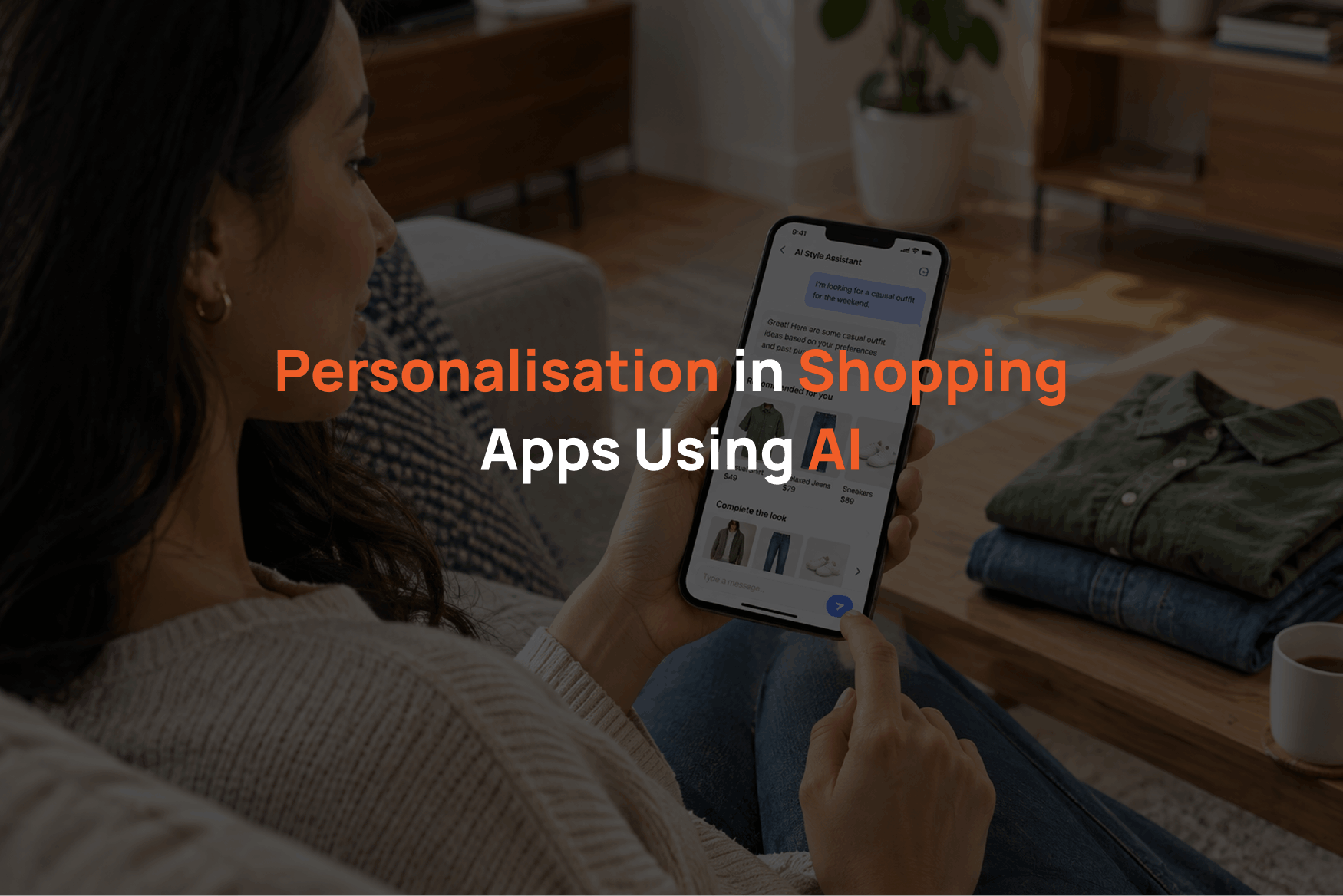
Open ten shopping apps right now. No two homepages of these apps will look alike. That’s not luck; it’s AI quietly deciding what you see, what you click, and eventually what you buy.
A few years back, this was a “nice-to-have”. However, it is not so anymore. This is because shoppers expect that an app will know them a little, and when it doesn’t, they lose interest and consequently leave.
What We Actually Mean By It
This is actually machine learning,which is casting an influence on your personal experiences rather than that of a large group such as “women 25-34.” The app monitors your browsing, purchases, shopping times, and location to change the display for you.
Old systems ran on simple rules that is buy shoes, see more shoes. It worked, technically, but felt clumsy, and it was unfortunately noticed by the customers. However, AI-driven personalisation tries to guess what someone wants before they’ve searched for it. It keeps refining that guess as behaviour of the user shifts.
Why It Matters Right Now
McKinsey puts a number on this: retailers doing it well see revenue lifts of 10-15%. That’s not a rounding error; it’s the kind of figure that gets a CFO’s attention.
There’s a perception gap too. Most retailers think they already deliver a personalised experience. Far fewer customers agree. That gap is basically money sitting on the table.
The engagement numbers back this up. People who click a personalised recommendation buy noticeably more than those scrolling generic listings. Even a push notification performs better when tailored to one person instead of blasted to an entire list.
The Techniques Doing The Work
Very few of the tools bear all the load, and that too by stacking up together.
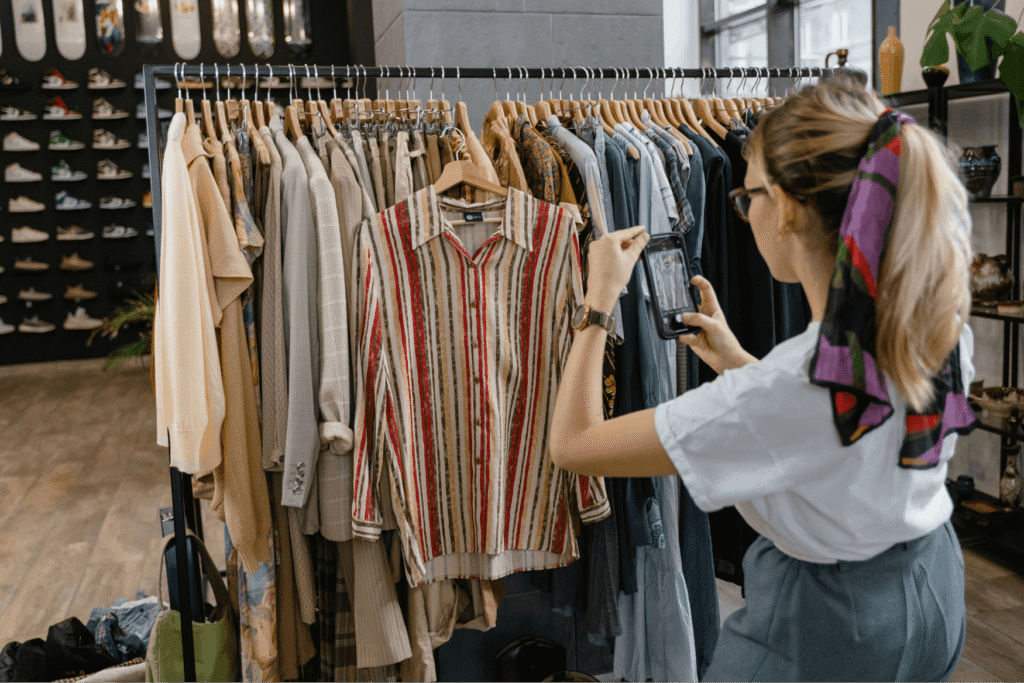
Recommendation engines consider your previous purchases and display those items to you when you browse through “customers also bought.” Predictive personalisation goes beyond this to even predict what you will buy in the future without asking for it. Search has changed too. AI-powered search ranks results by personal relevance rather than matching keywords, and visual search lets someone photograph a jacket and find something similar in your catalogue. Conversational assistants answer questions, suggest sizes, and walk shoppers through checkout, not unlike a decent sales assistant on the floor.
Prices can become more personal as well. Rather than having universal discounts, the application will customise the offers based on loyalty or timing. One of the easiest ways to do so is to send a personalised notification at approximately the right time.
Already Working At Scale
This isn’t theoretical. A substantial chunk of Amazon’s revenue comes directly from its recommendation engine, and traffic to AI shopping assistants spikes hard during major sales events evidence this holds up well beyond a small pilot.
Where It Can Go Wrong
All of that takes place by design.
Privacy breaches occur first on the list of risks. Companies operating in Australia must manage customer data correctly and be fully compliant with the privacy regulations. The vast majority of customers are okay with personalisation after learning the way the data is used; however, as soon as an app becomes creepy, all trust is instantly lost.
Moreover, there is a cold start problem for a new user with no purchase history available. That needs an actual strategy, not a quick fix bolted on later.
And plenty of retailers underestimate the execution gap. Understanding AI personalisation in theory is easy. Building it properly inside a live app is a different skill entirely.
Where To Start

Do not attempt to solve all problems at once. Choose one, whether it be a recommendation system or some smart notifications, and implement it properly before making any further moves.
It is also important to use first-party data whenever it is possible. Such data will be much more precise and will ensure much better protection of customers’ privacy than third-party sources. Constant testing, an iterative process, and considering the first iteration as just a start, not the final product, is also very important here.
It is also a good idea to have an engineering team that works with mobile and artificial intelligence development as a single process and not as two separate projects. The good personalised shopping experience cannot be built using only the recommendation widget; it should be backed by a solid data pipeline, architecture, and appropriate models.
Conclusion
Nowadays, personalisation is not an innovative feature that attracts users but a minimum acceptable condition for app performance, which all users expect from every shopping app they use. Although it does not impress anyone anymore, many will leave an app because of poor personalisation, offering diapers after a present for a baby shower or showing shoes the user bought weeks ago. It is not the case that the leading companies use more advanced algorithms than others. What they do is that they use the data properly, conduct regular tests and realise that the first iteration of personalisation is not the final solution. Recommendation systems and predictions are very important in shopping, but all of it is pointless without proper architecture and a functioning data pipeline under the hood. The companies that will succeed in the near future are those who have realised it already and started building it.
Let’s talk

Schedule a time for personalized analysis and solutions to scale your business effectively.


With more than 12 years in the game, we excel in delivering top-notch IT solutions tailored for medium-sized enterprises and large corporations. We're committed to your success, taking great pride in both our craftsmanship and the relationships we build with our clients.

Boost your Business Today by Teaming up with the Best!
1.5k Brochure Downloaded