Mental Health Apps: Growing Demand in Australia
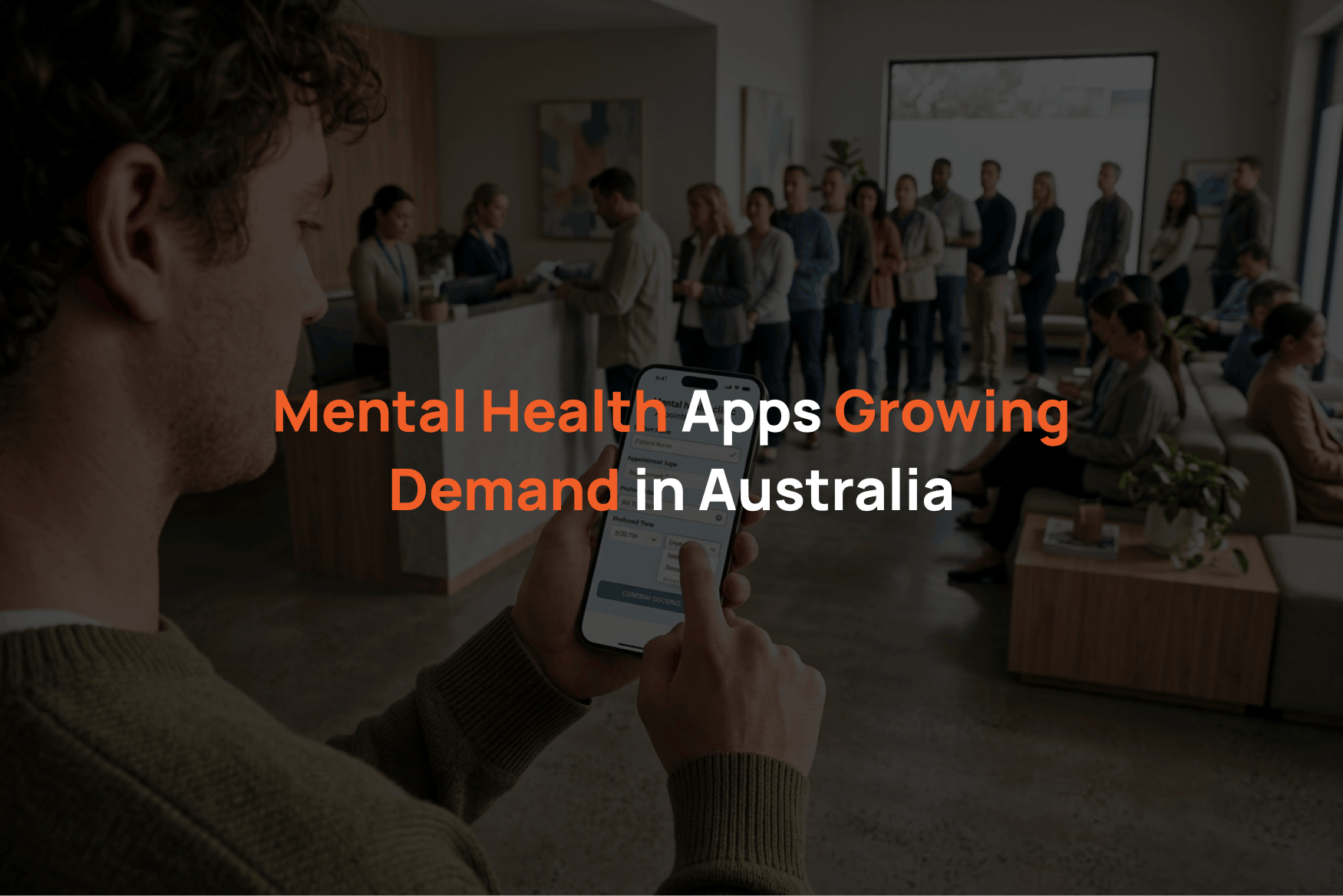
Booking a psychologist appointment in most Australian cities still means a multi-week wait, sometimes longer outside the major capitals. That gap between needing support and actually getting it is a big part of why mental health apps have become one of the more requested builds for teams doing healthcare app development Australia wide, as clinics, employers, and independent practitioners look for a way to reach people faster than the traditional booking system allows.
It’s also becoming a growing slice of broader mobile app development Australia work, since a mental health feature increasingly sits inside employee wellness platforms, university support systems, and general healthcare apps rather than existing purely on its own.
Why Demand Has Grown So Fast
There are a number of reasons why. First of all, the perception of mental health in the general population has changed radically over the last ten years, and while before, many avoided discussion of mental well-being, now they are seeking help. The existing structure, on its end, has not been scaled enough to accommodate that increased demand, long waits are still a norm when it comes to seeing a psychologist or a psychiatrist, and rural or regional areas do not have enough of those providers close-by.
An app doesn’t replace a clinician, but it can fill the gap between sessions or give someone a starting point while they wait for a proper appointment to come through.
Cost is part of the picture too. Even where appointments are available, the out-of-pocket gap between what Medicare rebates cover and what a private session actually costs puts ongoing care out of reach for a lot of people. An app with a low monthly fee, or one bundled into an existing health insurance or employer benefit, ends up being the only form of consistent support some users can realistically afford.
Workplaces have played a role here too. More employers are building mental health support directly into their wellness benefits, partly because burnout and stress-related leave have become expensive problems to ignore, and an app is a far easier benefit to roll out at scale than in-person counselling for every employee. Universities have picked up on the same pattern, offering app-based support to students who might never walk into a campus counselling office but will quietly open an app at two in the morning when something’s wrong.
What These Apps Actually Need to Get Right
Not every wellness app earns real, ongoing use. The ones that do tend to share a few things:
- Genuinely evidence-based content, not generic wellness tips dressed up as clinical support
- A simple, low-friction way to track mood or symptoms over time without it feeling like homework
- Clear pathways to a real practitioner when the app alone isn’t enough
- Crisis-safe design, so a distressed user is never left without a clear next step
- Strong privacy protections, since mental health data is about as sensitive as personal information gets
Miss on the last point especially, and trust disappears fast. People are far more cautious about mental health data than they are about most other categories of personal information, and rightly so.
The Regulatory Side Nobody Can Skip
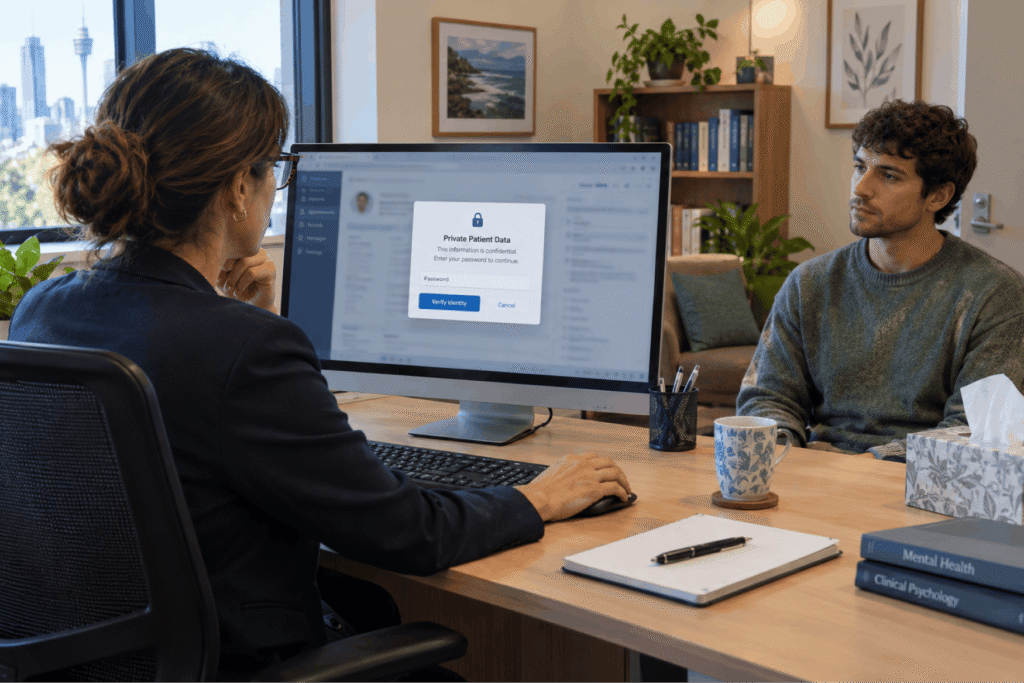
In Australia, health data is regulated by the Privacy Act 1988 and Australian Privacy Principles, with mental health data being even more sensitive under the same framework.
An app that keeps mood logs or therapy notes or flags for crisis should have proper encryption, wise data retention policies, and a clear plan for what happens if a user discloses something serious, like intent to self-harm, that a purely automated system isn’t capable of handling on its own. This is not box-ticking; it’s the difference between an app that really helps and one that quietly puts vulnerable users at ris.
Where the Space Is Heading
A few trends are shaping what comes next. AI-assisted checks are gaining ground, not to replace a therapist, but rather as a way to identify important patterns that need to be discussed in a real-life therapy session. Integration with wearable devices is becoming more commonplace – mood monitoring using sleep and activity data is becoming a reality without the need to manually track everything.
Peer groups and peer support options are also expanding after all, loneliness is a part of the reason for using such apps. Stepped-care systems are being tested by some of the platforms – starting off the user on the self-guided content and escalating to a live clinician only if the data indicates that it’s absolutely necessary. However, none of that can work without basic functionality done right, a credible and truly private application.
Building One the Right Way

This is exactly the kind of build App Gurus takes on for healthcare clients. Rather than adapting a generic wellness template, the team builds mental health features around real clinical input, proper data security, and the compliance requirements that come with handling sensitive health information, whether that’s a standalone support app or a mental health module inside a larger healthcare platform.
Conclusion
Mental health apps in Australia have moved well past being a nice-to-have add-on. They’re increasingly treated as genuine infrastructure sitting alongside traditional care, especially in a system where demand still outpaces the number of practitioners available.
The apps earning real trust are the ones built with proper clinical grounding and serious privacy protection, not the ones with the flashiest interface.
If you’re weighing up building something like this rather than adapting a generic template, App Gurus offers healthcare app development Australia clinics and businesses can trust with sensitive data, backed by broader mobile app development Australia experience across industries where privacy and compliance genuinely matter.
Let’s talk

Schedule a time for personalized analysis and solutions to scale your business effectively.
With more than 14 years in the game, we excel in delivering top-notch IT solutions tailored for medium-sized enterprises and large corporations. We're committed to your success, taking great pride in both our craftsmanship and the relationships we build with our clients.

Boost your Business Today by Teaming up with the Best!
1.5k Brochure Downloaded